Happy Pi Day - 3.14!
Pi, the mathematical constant symbolized by the Greek letter π , has a value of approximately 3.14159. Pi is calculated by the ratio of a circle’s circumference to its diameter – it applies to all circles of any size. Pi is amazing. It’s an irrational number, meaning it cannot be accurately represented by a fraction and its decimal representation goes on forever without repeating. To date, computers have calculated pi to trillions of digits. But the story of pi stretches far beyond the realm of mathematics. It’s found all over the place – in the fabric of the natural world, in technology, and more.
A Moment of Pi
Today, Pi Day (3.14) at 1:59 PM is considered the “Pi Minute” because the date and time represent the first six digits of pi (3.14159), making it an especially precise moment to celebrate. Why not celebrate “Pi Day” today and have a piece of pie at 1:59. I’ll have apple.
While you’re at it, look at these captivating aspects of pi that showcase some of the unexpected ways it touches our lives.
Pi's Philosophical Puzzle
Philosophers have pondered pi, using it as a metaphor for the infinite and the unknowable. The endless, non-repeating nature of pi’s digits has served as a symbol for the mysteries of the universe, inviting contemplation on the limits of human knowledge and the concept of infinity. From my own Christian perspective, I find myself in awe of pi’s omnipresence and how it mirrors the profound mystery of the Trinity both pervasive and endless.
A Journey Through Time and Digits
Pi’s history is as rich as its digit sequence. Ancient civilizations had their own approximations of pi, with the Babylonians and Egyptians making early estimates that were surprisingly close to its true value. Fast forward to today, and the quest to calculate pi has become a digital marathon, with trillions of digits computed, thanks to modern computing power.
Pi in the Sky and Beyond
Pi’s influence extends out into the cosmos, playing a key role in our understanding of the universe. From the orbits of planets to the properties of light, pi helps scientists decode the mysteries of the heavens, proving that this humble constant has a cosmic reach.
Natural Phenomena and Pi
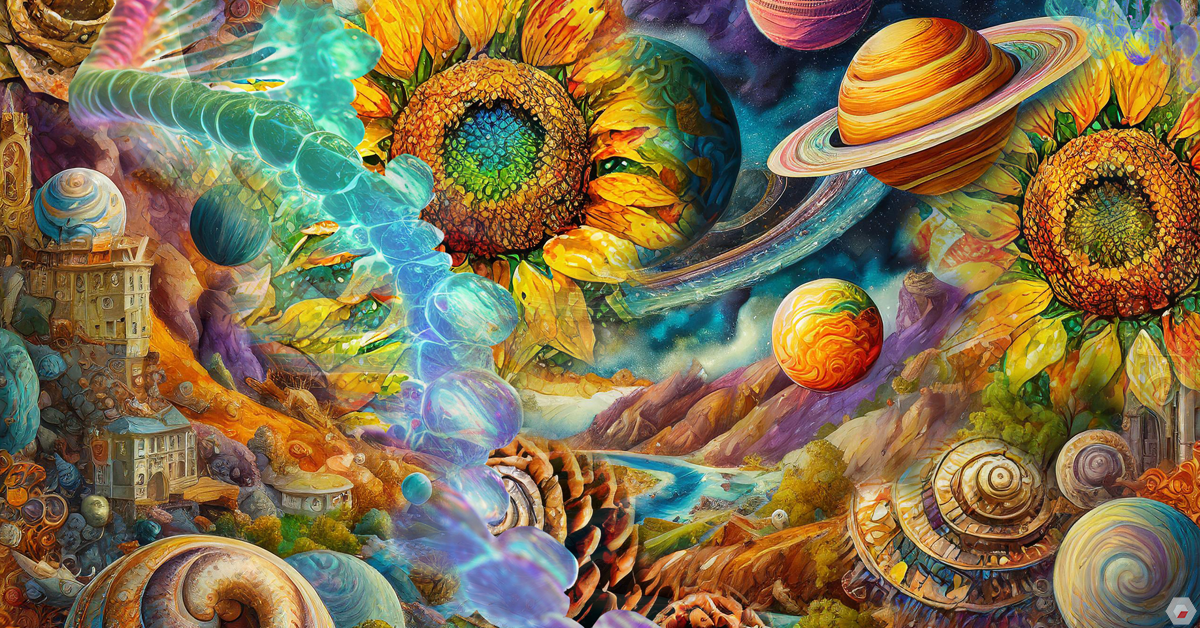
Pi doesn’t just exist in textbooks; it roams the great outdoors. The meandering paths of rivers, for example, often reflect pi in their winding journeys from source to sea. Even the growth patterns of pine cones and sunflowers reflect mathematical principles related to pi, showcasing the constant’s role in the growth and form of natural structures.
Pi in the Rhythm of Nature
Pi’s signature is evident in the rhythms and patterns of the natural world, from the cycles of the seasons to the oscillations of pendulums. These natural phenomena, which at first glance seem detached from mathematics, reveal a synchronicity with pi that underscores the interconnectedness of the universe. The regularity of tides, the periodicity of cicadas, and the timing of eclipses each echo pi’s theme of endless repetition and cycle, a reminder of the constant’s ubiquitous influence.
Pi and the Pattern of Life
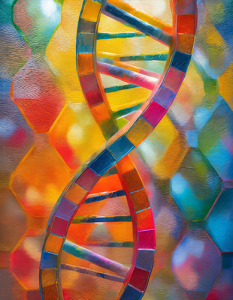
In the intricate dance of DNA’s double helix structure, pi plays a role in the calculations that describe the spiral geometry of our genetic material. This connection underscores the fundamental presence of mathematical constants in the very blueprint of life, hinting at the underlying order within biological complexity.
The Digital Dimensions of Pi
In the digital realm, pi finds its way into algorithms and coding, shaping the backbone of technologies we use daily. From the calculations that render circular graphics on our screens to the algorithms that predict patterns and behaviors in complex data sets, pi’s presence is an integral part of the computational processes. It’s a testament to how this ancient constant continues to facilitate modern innovation, bridging centuries through its application in cutting-edge technology.
Pi's Place in the Art World
The world of art also intersects with pi, where artists and architects have employed its ratios to create works that appeal to our innate sense of balance and beauty. The use of pi in determining proportions can be traced back to ancient structures and modern sculptures, offering a silent yet profound testament to the mathematical harmony found in visual arts.
The Athletic Arc of Pi
In the world of sports and physical dynamics, pi plays a surprisingly pivotal role. The physics of circular motions, such as the spin of a ball or the arc of a diver, rely on calculations involving pi. This mathematical constant informs strategies in games, optimizing performance and enhancing our understanding of athletic phenomena. The elegance of a perfectly executed basketball spin or the precise calculation that leads a gymnast through the air, each movement is subtly underscored by the principles of pi, illustrating its influence far beyond the static confines of theory.
With endless digits and broad applicability, pi is a source of endless fascination and inspiration. Whether you’re a math enthusiast, a nature lover, or just someone curious about the world, pi has something to pique your interest, proving that it truly is a number worth celebrating.